How is the IELTS Test conducted? A Complete Guide
Looking to snag that dream degree this spring but feeling unsure if you’ll hit that 7+ band in your IELTS test? Let’s be real—it’s intimidating. The ticking clock, the pressure to get everything right, and the stakes so high they feel sky-bound. No wonder it’s daunting!
But don’t worry! MasterIELTS has got your back. We’re here to teach you not just how to get your answers right but how to manage your time like a pro.
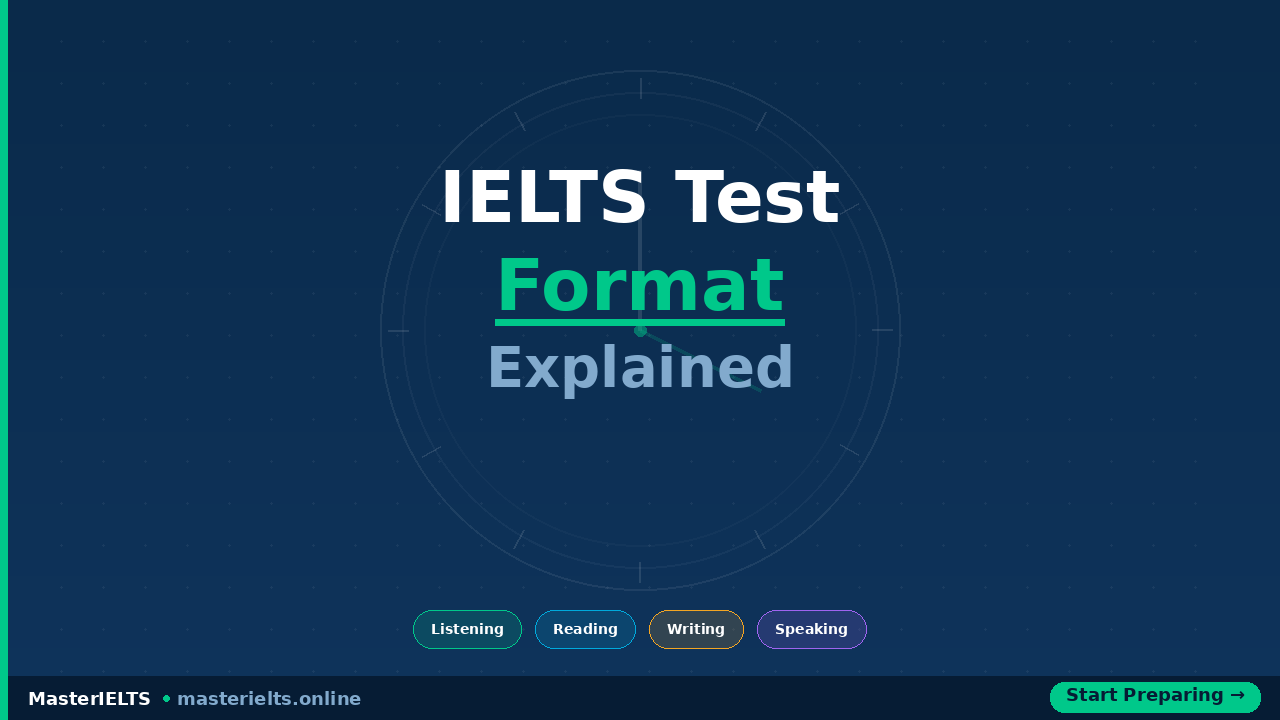
Now, let’s break it down. The IELTS test evaluates your English skills across four areas: speaking, reading, writing, and listening. It’s not just about knowing English; it’s about showing you can use it effectively under pressure. While the test might feel like a maze, here’s the first piece of good news: the format is consistent, whether you’re taking the Academic or General Training version.
Ready to dive into the details? Let’s get started!
How the test is delivered
When it comes to IELTS, you’ve got two ways to take the test. Think of it like choosing between old-school and modern vibes:
Paper-Based Test:
- You’ll head to a physical test center, pen in hand, and write out your answers for Listening, Reading, and Writing.
- Speaking? That’s an in-person chat with an examiner—kind of like a mini-interview.
Computer-Delivered Test:
- Still at a test center, but this time, you’re typing away on a computer for the Listening, Reading, and Writing sections.
- The Speaking test? It’s face-to-face with an examiner or sometimes done over video—don’t worry, it’s just as personal.
Here is a step-by-step guide to the test
Starting with your arrival at the Test Center:
• Arrive at least 30 minutes early to complete registration.
• Bring valid identification (usually your passport or national ID), as it will be checked multiple times.
• A photograph and fingerprint scan will often be taken for security purposes.
The Test Room Setup:
• Candidates are seated in individual stations for privacy and focus. This is also to avoid any attempts of cheating.
• Paper-based tests provide a question booklet and answer sheet. Computer-based tests provide noise-canceling headphones and a secure computer terminal.
Timing and Sequence:
The test is conducted in the following order:
Listening (30–40 minutes)
• Four audio recordings are played, and you answer 40 questions based on them. 10 questions for each audio
• In the paper-based test, you get an additional 10 minutes to transfer answers to the answer sheet. Whereas if it's online then you would input your answers straight into the computer.
2. Reading (60 minutes)
• Three sections with 40 questions in total.
• Academic IELTS includes passages on topics like science, history, or current events.
• General Training IELTS focuses on everyday materials like advertisements, brochures, and workplace documents.
3. Writing (60 minutes)
• Task 1: Write a report (Academic) or a letter (General Training) in about 150 words.
• Task 2: Write an essay (250 words) on a given topic.
4. Speaking (11–14 minutes)
• Conducted separately, usually on the same day or within seven days before or after the written tests.
• Involves a face-to-face conversation with an examiner in three parts:
• Part 1: Introduction and general questions about yourself.
• Part 2: A short speech on a given topic.
• Part 3: Discussion on more abstract topics related to Part 2.
Key Features of the IELTS Test
Strict Security Measures
IELTS test centers follow strict procedures to prevent malpractice, including ID verification, photography, and biometric scanning.
Quiet and Controlled Environment
Test rooms are designed to minimise distractions, ensuring candidates can concentrate fully on the test.
Timing and No Breaks
The Listening, Reading, and Writing sections are conducted back-to-back without breaks, lasting a total of 2 hours and 45 minutes.
How to prepare for Test Day
Practice Timed Tests:
Familiarise yourself with the test format and time constraints by completing practice tests.
Understand the Instructions:
Each section has specific rules; for example, word limits in Writing tasks or the transfer time in Listening for paper-based tests.
Plan for the Speaking Test:
Prepare to discuss familiar topics confidently and articulate your ideas clearly.
Arrive Early:
To avoid last-minute stress, arrive early and ensure you have all necessary documents.
After the Test: Results and Scoring
Scoring:
The IELTS is scored on a band scale of 0 to 9. Your overall score is an average of the four sections (Listening, Reading, Writing, Speaking).
Results:
• Computer-based tests: Results are available in 3–5 days.
• Paper-based tests: Results are available in 13 days.
Conclusion: Be Ready to Excel
The IELTS test is no small feat—it’s a structured, challenging exam designed to gauge your English skills for academic, professional, or migration goals. But don’t worry; with the right preparation, you can tackle it like a pro.
And you always have MasterIELTS to make your journey smoother. From realistic practice exercises to interactive activities that sharpen your writing, listening, and speaking skills, our platform has everything you need to boost your confidence and score big.
Want more tips, tricks, and expert insights? Stay tuned to our blogs for a steady flow of guidance. Or if you have questions or need personalised support? Contact us, and we’ll be happy to help.
And hey, why wait? Sign up to our portal for realistic coaching, time management tips, and hands-on practice tailored to your IELTS goals. Let’s ace this together!